**Table of Contents**
1. Introduction
2. Literature Review
2.1 Employee Engagement and its Importance
2.2 Theoretical Models on the Impact of Job Demands and Resources on Employee Engagement
2.3 Empirical Studies on the Relationship between Job Demands/Resources and Engagement
2.4 Criticisms and Limitations
3. Analysis and Evaluation
3.1 Critical Evaluation of the Literature
3.2 Comparison of Different Models and Perspectives
3.3 Identification of Gaps and Areas for Further Research
4. Application to HRM
4.1 The Importance of Employee Engagement for HRM
4.2 The Role of Learning and Development in Enhancing Employee Engagement
4.3 Practical Implications and Recommendations for HRM Practitioners
5. Conclusion
References
---
### 1. Introduction
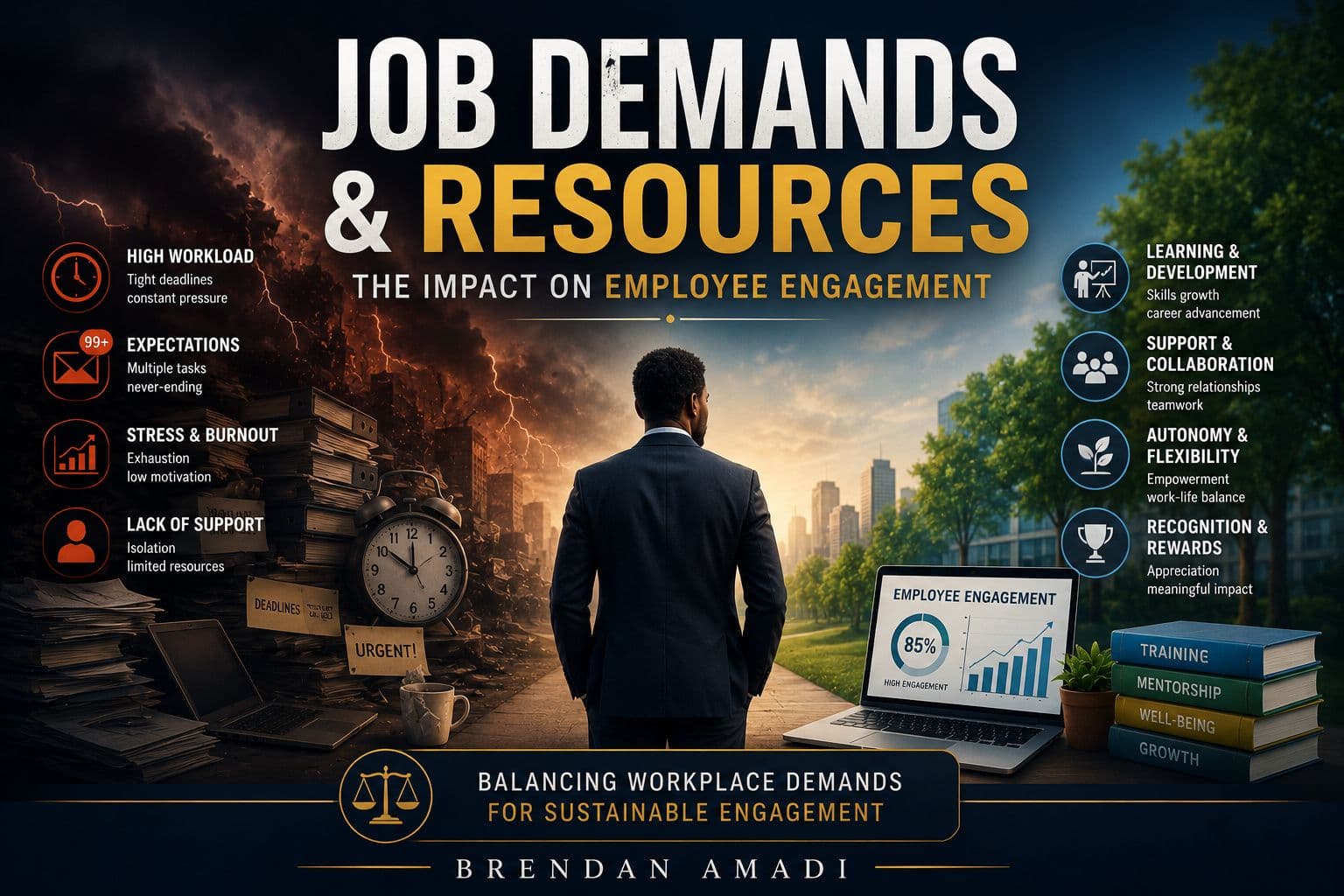
In contemporary workplaces, the intricate relationship between employee engagement, job demands, and resources has emerged as a focal point of scholarly discourse and practical concern (Anthony‐McMann, et al., 2017). The workforce landscape is a dynamic terrain where the clash between organisational expectations and individual capacities unfolds, impacting the very essence of employee commitment. The assertion that "When employees face excessive job demands without adequate resources, their engagement may decrease. On the other hand, when job resources are abundant, engagement tends to increase" encapsulates the dichotomy at the heart of this exploration. As organisations navigate the relentless pursuit of productivity and innovation, understanding the delicate equilibrium between demands and resources becomes paramount (Bailey, et al., 2017; Conway, et al., 2016).
Against this backdrop, the purpose of this essay is to critically dissect and evaluate existing literature on the impact of job demands and resources on employee engagement. This critical examination goes beyond a mere survey of theories; it aims to unravel the complexities inherent in this relationship, offering insights that transcend conventional wisdom. As we delve into the depths of these dynamics, the essay seeks to unravel not only the theoretical underpinnings but also their practical implications for Human Resource Management (HRM). Ultimately, the goal is to provide a foundation for HR professionals to strategically plan learning programs for career development that acknowledge and navigate the intricate interplay between demands, resources, and employee engagement in the contemporary workplace.
### 2. Literature Review
#### 2.1 Employee Engagement and its Importance
Employee engagement, a multifaceted construct reflecting the emotional, cognitive, and behavioral connection of employees to their work, has gained prominence in organisational research due to its profound implications for workplace outcomes (Chandani, et al., 2016). It transcends mere job satisfaction, encapsulating a holistic commitment that significantly influences productivity, innovation, and organisational success (Kaliannan & Adjovu, 2015; Hanaysha, 2016). However, beneath the veneer of its celebrated impact, the complexities of employee engagement necessitate a more critical examination, particularly concerning the intricate interplay between job demands and resources.
#### 2.2 Theoretical Models on the Impact of Job Demands and Resources on Employee Engagement
The Job Demands-Resources (JD-R) model, articulated by Huang, et al. (2016), is foundational in understanding the dynamics of employee engagement. According to this model, high job demands can precipitate burnout, yet the provision of sufficient job resources can act as a buffer, fostering engagement. For instance, consider a scenario where a sales executive faces the demanding task of meeting tight monthly targets. The provision of additional resources, such as advanced sales training or streamlined communication channels, can mitigate the negative impact of these demands, sustaining and even enhancing engagement levels (Koroglu & Ozmen, 2022).
Similarly, the Conservation of Resources (COR) theory, according to Hobfoll, et al. (2018) posits that individuals strive to retain, protect, and build resources to maintain well-being. This theory underscores the critical role of resources in preventing resource loss and, consequently, influencing engagement positively. An illustrative example involves an employee confronted with high job demands, such as challenging project timelines. Access to adequate resources, including mentorship and technological support, can prevent resource depletion, promoting sustained engagement (Hobfoll, et al., 2018).
#### 2.3 Empirical Studies on the Relationship between Job Demands/Resources and Engagement
Empirical studies buttress these theoretical frameworks. Ahmed (2019), research found that job resources, encompassing aspects like autonomy and social support, were positively correlated with engagement, acting as a protective factor against the adverse effects of job demands. In a practical context, consider a project team navigating tight deadlines. The provision of resources such as flexible work hours or collaborative tools can enhance engagement, despite the challenging demands (Karatepe & Olugbade, 2016).
Furthermore, Molino, et al., (2016), demonstrated the dynamic interplay between job demands and resources, emphasizing the importance of balance. In a workplace scenario, this equilibrium might involve recognizing and addressing excessive demands through targeted interventions like workload redistribution or skill development programs (Molino, et al., 2016)
#### 2.4 Criticisms and Limitations
While these models and studies contribute significantly, criticisms and limitations persist. Some scholars argue that the predominant focus on positive factors, such as resources, may downplay the negative impact of demands, potentially oversimplifying the intricate nature of work engagement (Galanakis & Tsitouri, 2022). To illustrate, a narrow focus on providing resources may inadvertently neglect the need to address and alleviate excessive demands, leading to an incomplete understanding of the dynamics at play (Galanakis & Tsitouri, 2022).
Additionally, the conceptualization and measurement of engagement vary across studies, posing challenges for generalizability and comparability. For instance, a study measuring engagement solely through self-report surveys may overlook subtle behavioral indicators or cultural nuances that influence engagement dynamics (Byrne, et al., 2016).
Hence, while theoretical models and empirical evidence enrich our understanding of the relationship between job demands, resources, and employee engagement, a critical lens is indispensable for navigating the nuances and limitations within the literature. By acknowledging these complexities, researchers and practitioners can cultivate a more comprehensive understanding, fostering the development of targeted interventions that address both demands and resources for sustained and meaningful employee engagement in diverse organisational contexts.
### 3. Analysis and Evaluation
#### 3.1 Critical Evaluation of the Literature
The literature surrounding the interplay between job demands, resources, and employee engagement exhibits both strengths and inherent complexities. While influential models like the Job Demands-Resources (JD-R) model and Conservation of Resources (COR) theory provide insightful frameworks, a nuanced examination uncovers intricacies requiring careful consideration. Goering, et al. (2017) and (Crawford, et al., 2010) argue that the prevailing optimism regarding positive resources may inadvertently overlook the potential adverse effects of unmitigated job demands, challenging the simplistic portrayal of resources as universal solutions. Moreover, the literature predominantly reflects a Western-centric perspective, prompting skepticism about the universal applicability of its findings across diverse cultural contexts. For instance, a resource-intensive intervention that proves effective in a Western corporate setting may yield different outcomes in an Asian cultural milieu due to distinct perceptions of work and well-being (Goering, et al., 2017; Crawford, et al., 2010).
#### 3.2 Comparison of Different Models and Perspectives
A comparative analysis of prominent models reveals both convergences and divergences. The JD-R model, emphasizing the mitigating role of resources on demands, and the broader COR theory, highlighting resource acquisition as a protective mechanism, present differing emphases. This divergence necessitates a more nuanced understanding of when and how specific resources may effectively counteract distinct demands. Practical applicability further varies across industries and organisational structures, demanding tailored approaches for optimal relevance. For example, the collaborative nature of resource utilization may thrive in a technology-driven start-up but might encounter obstacles in a traditionally hierarchical organisation (Van Woerkom, et al., 2016).
#### 3.3 Identification of Gaps and Areas for Further Research
Despite the wealth of existing literature, notable gaps persist, warranting critical scrutiny. The overemphasis on positive aspects tends to sideline the exploration of negative job demands, indicating a potential bias in the conceptualization of employee engagement. To address this, future research could delve into the intricate dynamics of how detrimental demands impact engagement and explore strategies for their mitigation. Moreover, the controlled environments in which many studies are conducted raise questions about the external validity of findings. Real-world applications, such as the implementation of JD-R model interventions in healthcare settings, may yield insights into the adaptability and effectiveness of these models in dynamic, complex organizational realities. Additionally, the role of individual differences in shaping the impact of job demands and resources on engagement remains underexplored. Examining how factors like personality, coping mechanisms, and socio-cultural backgrounds moderate these relationships would enhance the field's theoretical richness (Van Woerkom, et al., 2016; Koroglu & Ozmen, 2022; Kwon & Kim, 2020).
Hence, while the existing literature lays a solid foundation, a critical analysis underscores the imperative for a more nuanced understanding. Contextual factors must be recognized, and uncharted territories warrant exploration for a more comprehensive and applicable knowledge base. Addressing these gaps not only refines theoretical robustness but also ensures the practical relevance of interventions, empowering HRM professionals to foster sustainable employee engagement across diverse organisational landscapes.
### 4. Application to HRM
#### 4.1 The Importance of Employee Engagement for HRM
According to Puspita, et al. (2023), Employee engagement stands as a linchpin in the Human Resource Management (HRM) domain, wielding substantial influence over organisational success. The relationship between engaged employees and positive outcomes, such as increased productivity and retention, is well-established (Chandani, et al., 2016; Goering, et al., 2017). HRM practitioners recognize that engaged employees not only contribute significantly to their roles but also foster a positive workplace culture, impacting overall organisational performance. Therefore, understanding and strategically managing the factors that influence employee engagement is paramount for HRM (Puspita, et al., 2023).
#### 4.2 The Role of Learning and Development in Enhancing Employee Engagement
Learning and Development (L&D) emerges as a pivotal tool in the HRM arsenal for cultivating and sustaining employee engagement (Hanaysha, 2016). The Job Demands-Resources (JD-R) model, a prominent theoretical framework, posits that job resources, including opportunities for skill development, are instrumental in fostering engagement (Huang, et al., 2016). For instance, consider a scenario where HRM identifies a team experiencing high job demands due to the implementation of a new technology. By proactively providing targeted training programs and support, HRM not only addresses the demands but also empowers employees with the necessary resources, fostering engagement amidst change (Albrecht, et al., 2015).
Furthermore, the role of L&D extends beyond mitigating demands. A study by Hadsell, et al., (2020) emphasizes that continuous learning opportunities contribute to a sense of mastery and autonomy, key components of engagement. HRM, recognizing this, can design learning programs that not only address immediate job demands but also empower employees to navigate challenges independently, enhancing their sense of control and investment in their work (Hadsell, et al., 2020).
#### 4.3 Practical Implications and Recommendations for HRM Practitioners
Practical implications for HRM practitioners involve a strategic alignment of learning programs with the nuances of employee engagement. Firstly, HRM should conduct thorough needs assessments to identify specific job demands and resource gaps within the organization. This diagnostic approach allows for tailored interventions, ensuring that L&D initiatives directly address the unique challenges faced by employees (Albrecht, et al., 2015).
Secondly, HRM practitioners should adopt a proactive stance in anticipating future demands. The literature suggests that foresightedness in offering relevant training before demands escalate enhances employees' resilience and adaptability, positively impacting engagement. For example, in an ever-evolving industry, HRM can implement anticipatory training programs to equip employees with the skills necessary for upcoming challenges, instilling a sense of preparedness and confidence (Albrecht, et al., 2015; Krishnaveni & Monica, 2016).
Moreover, HRM should champion a culture of continuous learning, fostering an environment where employees perceive learning and development as integral to their professional growth. This aligns with the JD-R model's emphasis on resources as protective factors; HRM, by promoting a learning culture, provides employees with the psychological resources necessary for sustained engagement (Bakker & Demerouti, 2007). An organisation that invests in employee development signals a commitment to their well-being, influencing engagement positively (Albrecht, et al., 2015; Krishnaveni & Monica, 2016).
Additionally, HRM practitioners should leverage diverse learning modalities, recognizing that individual preferences and learning styles vary. By offering a mix of on-the-job training, workshops, e-learning platforms, and mentorship programs, HRM accommodates the diverse needs of employees, enhancing the accessibility and effectiveness of L&D initiatives (Albrecht, et al., 2015; Krishnaveni & Monica, 2016).
Hence, the application of theories related to employee engagement and learning and development in HRM necessitates a multifaceted approach. HRM practitioners play a pivotal role in understanding, anticipating, and addressing job demands and resource needs through strategic learning initiatives. By embracing a proactive and tailored approach, HRM can foster a culture where learning becomes synonymous with engagement, ultimately contributing to the holistic success of the organisation.
### 5. Conclusion
In conclusion, the intricate dynamics between job demands, resources, and employee engagement underscore the pivotal role that Human Resource Management (HRM) plays in shaping organizational success. The literature review elucidates the multifaceted nature of employee engagement, emphasizing its significance in driving productivity, satisfaction, and retention. The critical analysis and evaluation reveal the nuanced interplay between job demands and resources, challenging simplistic narratives and highlighting cultural nuances often overlooked in the discourse.
The application of theories to HRM underscores the strategic importance of Learning and Development (L&D) in cultivating and sustaining employee engagement. By aligning training initiatives with identified job demands, HRM not only addresses immediate challenges but also fosters a culture of continuous learning, empowering employees to navigate evolving work landscapes. Practical recommendations for HRM practitioners emphasize the need for tailored interventions, proactive anticipation of future demands, and the cultivation of a diverse learning culture.
In essence, HRM emerges as the orchestrator of a delicate balance, navigating the complexities of employee engagement through thoughtful L&D strategies. The implications of this engagement transcend individual well-being, ultimately influencing the broader organisational landscape and contributing to sustained success in an ever-evolving professional paradigm.
### References
* Ahmed, U., 2019. Job Demands and Work Engagement: Call for More Urgent Empirical Attention. Annals of Contemporary Developments in Management & HR (ACDMHR), 1(2), pp. 2632-7686.
* Albrecht, S. L.; Bakker, A. B.; Gruman, J. A.; Macey, W. H.; & Saks, A. M., 2015. Employee engagement, human resource management practices and competitive advantage: An integrated approach. Journal of organizational effectiveness: People and performance, 2(1), pp. 7-35.
* Anthony‐McMann, P. E., Ellinger, A. D., Astakhova, M. & Halbesleben, J. R., 2017. Exploring different operationalizations of employee engagement and their relationships with workplace stress and burnout. Human Resource Development Quarterly, 28(2), pp. 163-195.
* Bailey, C., Madden, A., Alfes, K. & Fletcher, L., 2017. The meaning, antecedents and outcomes of employee engagement: A narrative synthesis. International Journal of Management Reviews, 19(1), pp. 31-53.
* Byrne, Z. S., Peters, J. M. & Weston, J. W., 2016. The struggle with employee engagement: Measures and construct clarification using five samples. Journal of Applied Psychology, 101(9), p. 1201.
* Chandani, A., Mehta, M., Mall, A. & Khokhar, V., 2016. Employee engagement: A review paper on factors affecting employee engagement. Indian Journal of Science and Technology, 9(15), pp. 1-7.
* Conway, E.; Fu, N.; Monks, K.; Alfes, K.; & Bailey, C., 2016. Demands or resources? The relationship between HR practices, employee engagement, and emotional exhaustion within a hybrid model of employment relations. Human Resource Management, 55(5), pp. 901-917.
* Crawford, E. R., LePine, J. A. & Rich, B. L., 2010. Linking job demands and resources to employee engagement and burnout: a theoretical extension and meta-analytic test. Journal of Applied Psychology, 95(5), p. 834.
* Galanakis, M. D. & Tsitouri, E., 2022. Positive psychology in the working environment. Job demands-resources theory, work engagement and burnout: A systematic literature review. Frontiers in Psychology, Volume 13, pp. 1-10.
* Goering, D. D.; Shimazu, A.; Zhou, F.; Wada, T.; & Sakai, R., 2017. Not if, but how they differ: A meta-analytic test of the nomological networks of burnout and engagement. Burnout Research, Volume 5, pp. 21-34.
* Hadsell, R., Rao, D., Rusu, A. A. & Pascanu, R., 2020. Embracing change: Continual learning in deep neural networks. Trends in cognitive sciences, 24(12), pp. 1028-1040.
* Hanaysha, J., 2016. Testing the effects of employee engagement, work environment, and organisational learning on organisational commitment. Procedia-Social and Behavioral Sciences, Volume 229, pp. 289-297.
* Hobfoll, S. E., Halbesleben, J., Neveu, J. P. & Westman, M., 2018. Conservation of resources in the organizational context: The reality of resources and their consequences. Annual review of organizational psychology and organizational behavior, Volume 5, pp. 103-128.
* Huang, J., Wang, Y. & You, X., 2016. The job demands-resources model and job burnout: The mediating role of personal resources. Current Psychology, 35(4), pp. 562-569.
* Kaliannan, M. & Adjovu, S. N., 2015. Effective employee engagement and organizational success: a case study. Procedia-Social and Behavioral Sciences, Volume 172, pp. 161-168.
* Karatepe, O. M. & Olugbade, O. A., 2016. The mediating role of work engagement in the relationship between high-performance work practices and job outcomes of employees in Nigeria. International Journal of Contemporary Hospitality Management, 28(10), pp. 2350-2371.
* Koroglu, Ş. & Ozmen, O., 2022. The mediating effect of work engagement on innovative work behavior and the role of psychological well-being in the job demands–resources (JD-R) model. Asia-Pacific Journal of Business Administration, 14(1), pp. 124-144.
* Krishnaveni, R. & Monica, M. R., 2016. Employee Engagement: Key Implications For Human Resource Management Practices. Pacific Business Review Internationa, 9(5), pp. 148-154.
* Kwon, K. & Kim, T., 2020. An integrative literature review of employee engagement and innovative behavior: Revisiting the JD-R model. Human Resource Management Review, 30(2), pp. 1-10.
* Molino, M., Bakker, A. B. & Ghislieri, C., 2016. The role of workaholism in the job demands-resources model. Anxiety, Stress, & Coping, 29(4), pp. 400-414.
* Puspita, N., Merta, I. & Ardiansyah, W., 2023. The Influence of Human Relations, Social Work Environment and Work Motivation on Employee Performance. Jurnal Ilmiah Manajemen Kesatuan, 11(2), pp. 411-420.
* Van Woerkom, M., Bakker, A. B. & Nishii, L. H., 2016. Accumulative job demands and support for strength use: Fine-tuning the job demands-resources model using conservation of resources theory. Journal of Applied Psychology, 101(1), p. 141.
Job Demands and Resources on Employee Engagement
A critical evaluation of the literature surrounding the impact of job demands and resources on employee engagement, exploring its theoretical underpinnings and practical implications for Human Resource Management (HRM).
By Amadi BrendanApril 10, 202518 min read68K views
Media
About the Author
Amadi Brendan
This author contributes inspiring stories and spiritual content to our community.
View all stories →Loading related stories...